CASE STUDY
Enhancing Geotechnical Risk Assessment: High-Resolution UAS LiDAR for Remote Roadway Terrain Management
Sector : Architecture Engineering and Construction, Natural Resources and Environment, Public Safety and Security I Geography : Asia-Pacific I Country : Australia
Case Study
Enhancing Geotechnical Risk Assessment: High-Resolution UAS LiDAR for Remote Roadway Terrain Management
Enhancing Geotechnical Risk Assessment: High-Resolution UAS LiDAR for Remote Roadway Terrain Management
Source: YellowScan
Diodrone undertook a geotechnical risk assessment for a 170km rural road passing through rugged and landslide-prone terrain in Australia. The conventional inspection methods were insufficient due to the dense vegetation and large sandstone escarpments, leaving significant portions of the slopes unassessed.
The YellowScan Surveyor LiDAR system was deployed to survey both sides of the valley, covering a 400-hectare mountainous region with up to 250m of vertical relief. Over four days, the team completed 27 flights, operating at 50m above ground level and achieving a flight speed of 4m/s. With advanced pre-programmed flight paths and variable scan angles, the LiDAR captured high-density data (400 points/m²), enabling the detection of features such as cliff faces, caves, and overhangs.
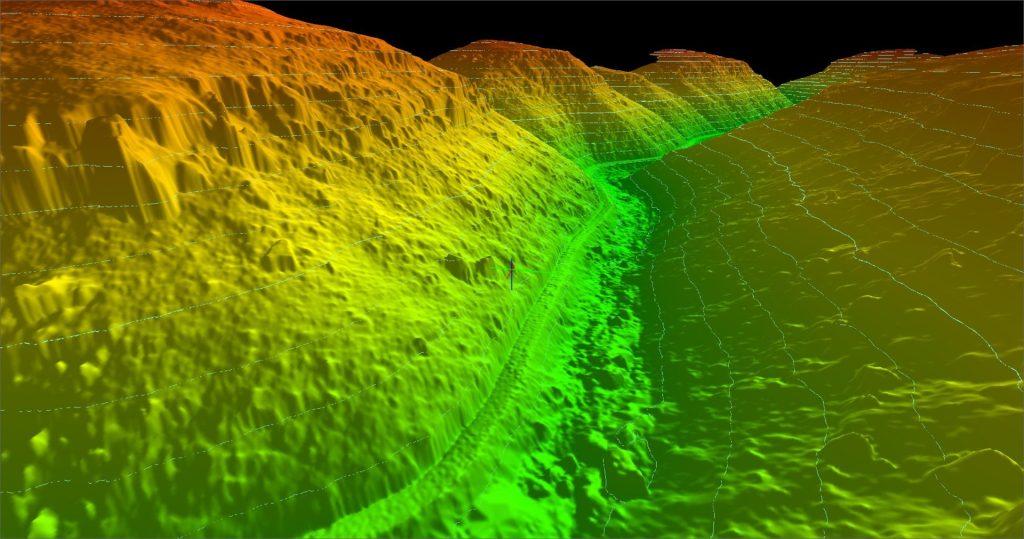
The resulting high-resolution LiDAR pointcloud was meticulously classified to retain critical geological features, including boulders, erosion gullies, and landslide debris. This data was used to create a high-fidelity digital terrain model (DTM) that provided geotechnical engineers with a comprehensive heatmap of potential rockfall sources, facilitating precise risk assessment and decision-making.



Diospatial

YELLOWSCAN