CASE STUDY
Enhancing Archaeological Field Surveys at Troesmis with GIS Technology
Sector : Architecture Engineering and Construction I Geography : Europe I Country : Romania
Case Study
Enhancing Archaeological Field Surveys at Troesmis with GIS Technology
Enhancing Archaeological Field Surveys at Troesmis with GIS Technology
Source: GIS Cloud
The archaeological survey at Troesmis, an ancient Roman and Byzantine site near Tulcea, Romania, aimed to uncover and document a rich tapestry of historical settlements spanning from the 2nd to the 13th century AD. This ambitious project, led by the Austrian Academy of Sciences in collaboration with Romanian and Austrian academic institutions, explored a 35 km² area containing a Roman legionary fortress, a Roman town, and multiple fortifications.
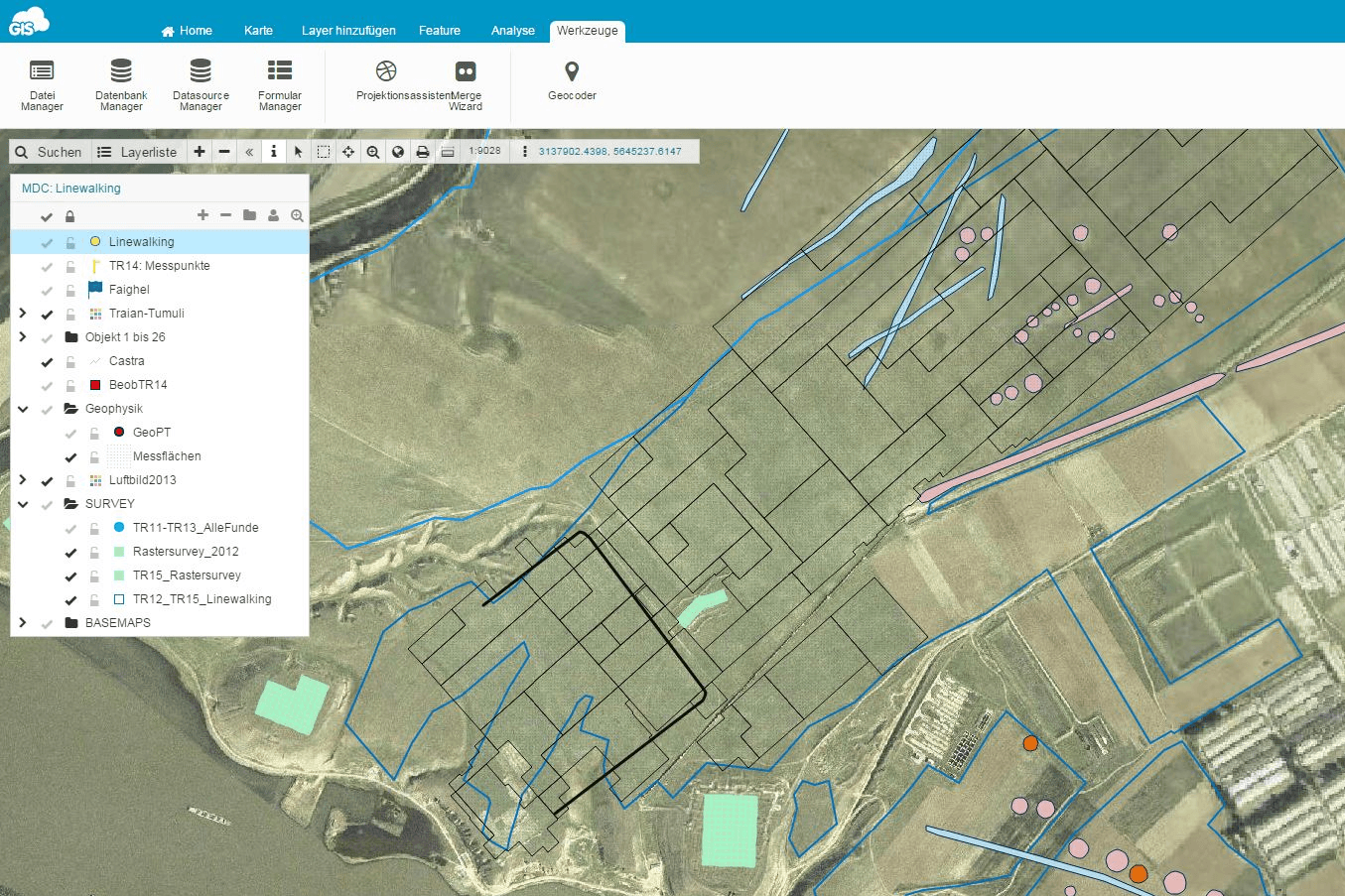
To address the complexities of the site, archaeologists employed a GIS-enabled workflow. A Mobile Data Collection (MDC) app facilitated seamless field data collection in a steppe-like landscape with limited infrastructure. This approach streamlined the documentation of artifacts, crop marks, and other archaeological features, which were previously challenging to map using traditional line-walking techniques. By integrating data from various sources such as aerial imagery, photogrammetry, and geophysical surveys, the project achieved high spatial accuracy and efficient data visualization.
GIS Cloud Map Editor further enhanced the workflow by providing symbology and tools for artifact mapping, enabling researchers to visualize and analyze collected data instantly. The use of cloud-based solutions simplified collaboration among field teams, who could access and share data in real time despite being in a remote, offline environment.



OEAW; Academia Română; Universität Innsbruck

GIS Cloud Ltd