CASE STUDY
Assessing Forest Defoliation: LiDAR Mapping for Gypsy Moth Infestation Analysis
Sector : Natural Resources and Environment I Geography : North America/Central America/Caribbean I Country : USA
Case Study
Assessing Forest Defoliation: LiDAR Mapping for Gypsy Moth Infestation Analysis
Assessing Forest Defoliation: LiDAR Mapping for Gypsy Moth Infestation Analysis
Source: YellowScan
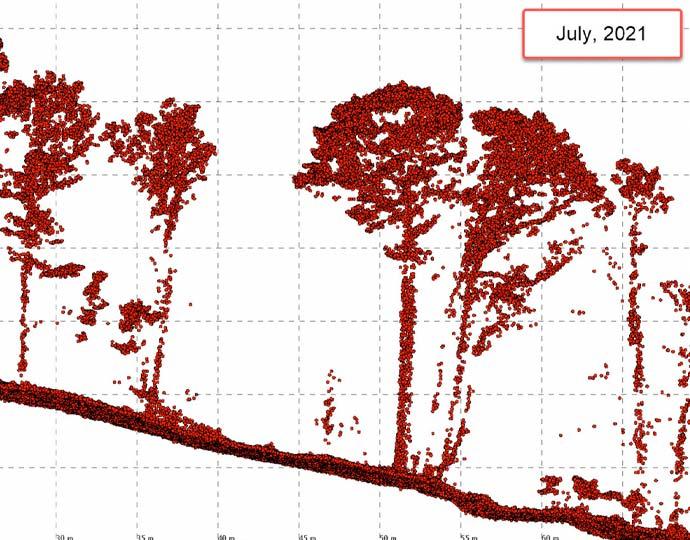
The University of Vermont Spatial Analysis Lab (UVM-SAL) leveraged drone-based LiDAR technology to monitor the largest gypsy moth infestation in Vermont in over 30 years. This invasive species, usually controlled by a fungus, proliferated due to unusually dry conditions, preventing fungus from thriving. The caterpillars devoured leaves from the forest canopy, creating barren patches across regions typically lush with greenery.
UVM-SAL, with nearly a decade of drone imaging experience, transitioned to active sensing to quantify the structural changes in the forest caused by defoliation. YellowScan’s Mapper LiDAR sensor was employed for this purpose. The team collected data in July during peak defoliation and again in August during foliage recovery. The resulting point cloud and photos captured baseline data for ongoing monitoring and analysis, aiding collaboration with the U.S. Forest Service to study the infestation’s long-term effects.



Spatial Analysis Laboratory, The University of Vermont

Forest Service, U.S. Department of Agriculture; YELLOWSCAN